Dianthus caryophyllus
pinks
Every Dianthus caryophyllus on HortOS in one place: the plain species and 2 varieties. Pick a size to see it across all of them.
Part of Dianthus: see them all
6 growers · 4 sizes · POA
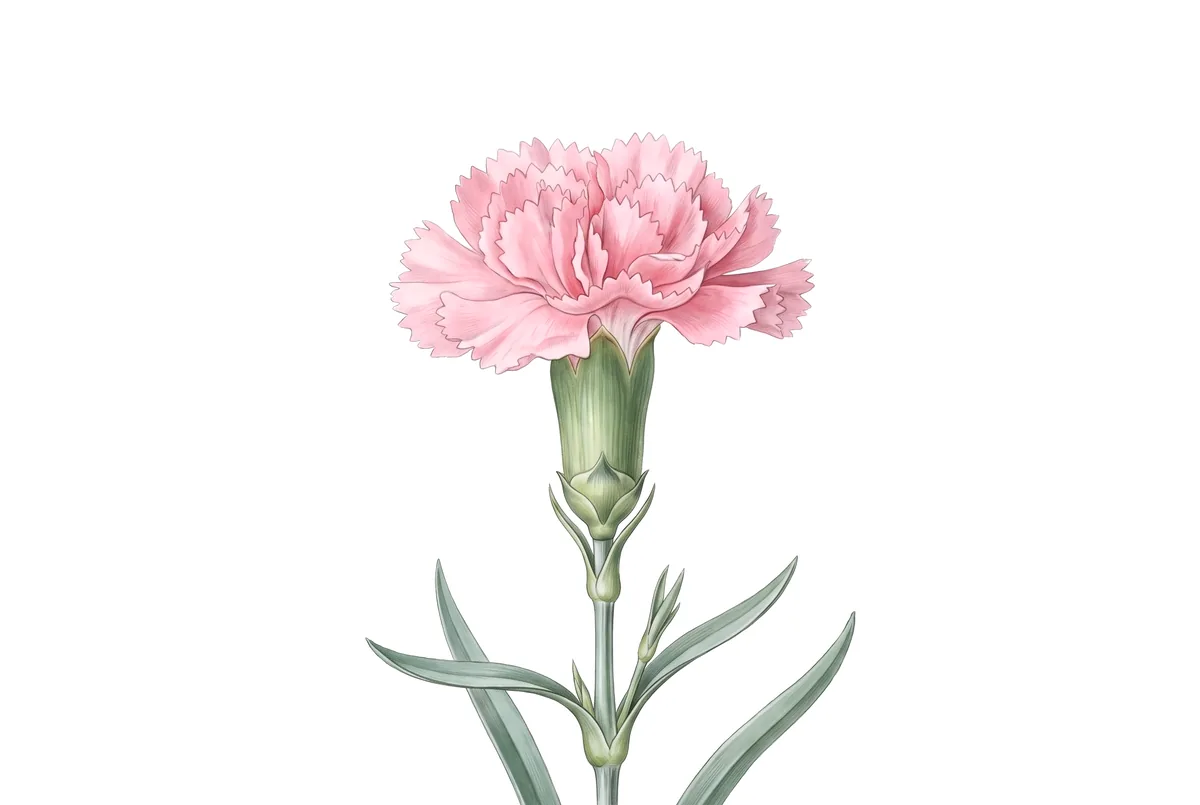
- Type
- Perennial
- Height
- 0.3 m to 1.2 m
- Spread
- 0.15 m to 0.3 m
- Flowers
- Pink, summer
- Sun
- Full sun to part shade, by NC State Extension
- In Canada
- Not native
Growing carnation
Hardiness. Natural Resources Canada's plant hardiness site holds a page for carnation, under the names carnation, clove pink and hardy carnation, but says it has too few observations to map its range, so no Canadian zone is given. Kwantlen gives it as Zone 6 (-23 to -18 C), without naming the scale. North Carolina State Extension, an American reference, gives USDA zones 6a to 9b and says carnations prefer cool summers and do not take high heat.
Sun and soil. Kwantlen gives full sun and a well-drained, alkaline, rocky or gravelly soil, with low water use. North Carolina State Extension gives full sun to part shade and a moist, well-drained, gritty soil rich in organic matter, neutral to slightly alkaline.
Care. North Carolina State Extension lengthens flowering by removing spent flowers, and pinches out the centre of the plant to make it bushier. It raises carnations from seed or stem cuttings.
Problems. North Carolina State Extension reports rust and crown rot, and names the plant as a host for the caterpillars of several moths. It also lists the plant as resistant to deer and rabbits.
Using carnation
Kwantlen lists carnation for containers, perennial borders and rock gardens, for cut flowers and floristry, for fragrance and summer interest, and to draw butterflies. North Carolina State Extension adds cottage and cutting gardens and patio containers, and says a taller kind is the one grown for florists and cut flowers. By Kwantlen, the flowers come from May to September in open clusters of 2 to 5, each 3 to 5 cm wide, often doubled with up to 20 ruffled petals, in colours from white, yellow and orange to pink, red and purple, with a spicy scent. For the wider genus, see the page on pinks.
What to check before you buy
Growers in the HortOS catalogue for Canada list it as Dianthus caryophyllus, with the common name pinks, and list named carnations such as Rock Violet and Sunflor Dynamite on their own lines. North Carolina State Extension says there are many cultivars in many colours and sizes. Canadian growers name container sizes by class, as the guide to plant grades and container sizes explains, and the root and pest checks are in the guide to nursery plant quality. The table above shows the sizes growers list. For pets, see the cautions.
Cautions
The ASPCA lists carnation (Dianthus caryophyllus) as toxic to dogs, cats and horses. It gives the toxic principle as an unknown irritant and the signs as mild stomach and gut upset and mild dermatitis.
Used forcut flowerpots and courtyards
Prices are set by each grower and shown ex tax. Availability is confirmed by the grower at order.
Common questions
- Who grows Dianthus caryophyllus wholesale in Canada?
- 6 wholesale growers list Dianthus caryophyllus on HortOS right now, each with their own pot sizes and trade prices. They are in British Columbia, Manitoba, Quebec and Alberta. The growers are named on this page.
- What pot sizes does Dianthus caryophyllus come in?
- Growers on HortOS list Dianthus caryophyllus in 102 cell plug, 36", 110mm and 1G.
- How do I order Dianthus caryophyllus from these growers?
- HortOS is for the trade. Add the lines you want to a list and send it: each grower gets their part of the order by email, confirms what they have and quotes freight, and nothing is bought until you approve it. Listing, searching and ordering are free.
- Is carnation hardy in Canada?
- No Canadian zone is published for it: Natural Resources Canada says it has too few observations to map. Kwantlen gives it as Zone 6 (-23 to -18 C), without naming the scale, and North Carolina State Extension gives USDA zones 6a to 9b.
- How tall do carnations grow?
- Kwantlen gives a mature height of 0.4 to 0.7 m, with most cultivars 15 to 80 cm. North Carolina State Extension gives 0.3 to 1.2 m and says a taller kind is grown for the florist trade.
- When do carnations flower?
- Kwantlen gives a peak from May to September. North Carolina State Extension gives midsummer and says removing spent flowers lengthens the season.
- Is a carnation the same as a pink?
- Both are Dianthus: HortFlora, the Horticultural Flora of South-eastern Australia, names the carnations (D. caryophyllus) and the pinks (D. plumarius and others) as the genus's best-known garden groups. Natural Resources Canada gives clove pink and hardy carnation as other names for Dianthus caryophyllus, and growers in the HortOS catalogue for Canada list it under the common name pinks.
- Are carnations poisonous to pets?
- The ASPCA lists carnation as toxic to dogs, cats and horses, with mild stomach upset and mild dermatitis.
- What soil do carnations need?
- Well drained, by Kwantlen and North Carolina State Extension. Kwantlen gives an alkaline, rocky or gravelly soil and low water use; North Carolina State Extension a moist, gritty soil rich in organic matter, neutral to slightly alkaline.
Sources
- GBIF species match API
- ASPCA Animal Poison Control, Toxic and Non-Toxic Plants: Carnation (Dianthus caryophyllus)
- VASCAN, the Database of Vascular Plants of Canada (Canadensys), name search: Dianthus caryophyllus
- HortFlora, the Horticultural Flora of South-eastern Australia (Royal Botanic Gardens Victoria): the genus Dianthus
- North Carolina State Extension Gardener Plant Toolbox: Dianthus caryophyllus
- Natural Resources Canada, Canada's Plant Hardiness Site: Dianthus caryophyllus (species page)
- Kwantlen Polytechnic University, School of Horticulture, KPU Plant Database: Dianthus caryophyllus
- The HortOS catalogue for Canada (the names growers list Dianthus caryophyllus under)
- The HortOS guides for Canada (plant grades and container sizes; nursery plant quality)
The growers, sizes and prices above are live and change as lists arrive. Cite this page: HortOS, Carnation (Dianthus caryophyllus), https://ca.hortosapp.com/plants/dianthus-caryophyllus.
Found a fact that is wrong? Tell us and it is checked against its source.