Campanula carpatica
Carpathian Harebell
Every Campanula carpatica on HortOS in one place: the plain species and 8 varieties. Pick a size to see it across all of them.
Part of Campanula Spp: see them all
12 growers · 6 sizes · from $1.00 ex tax
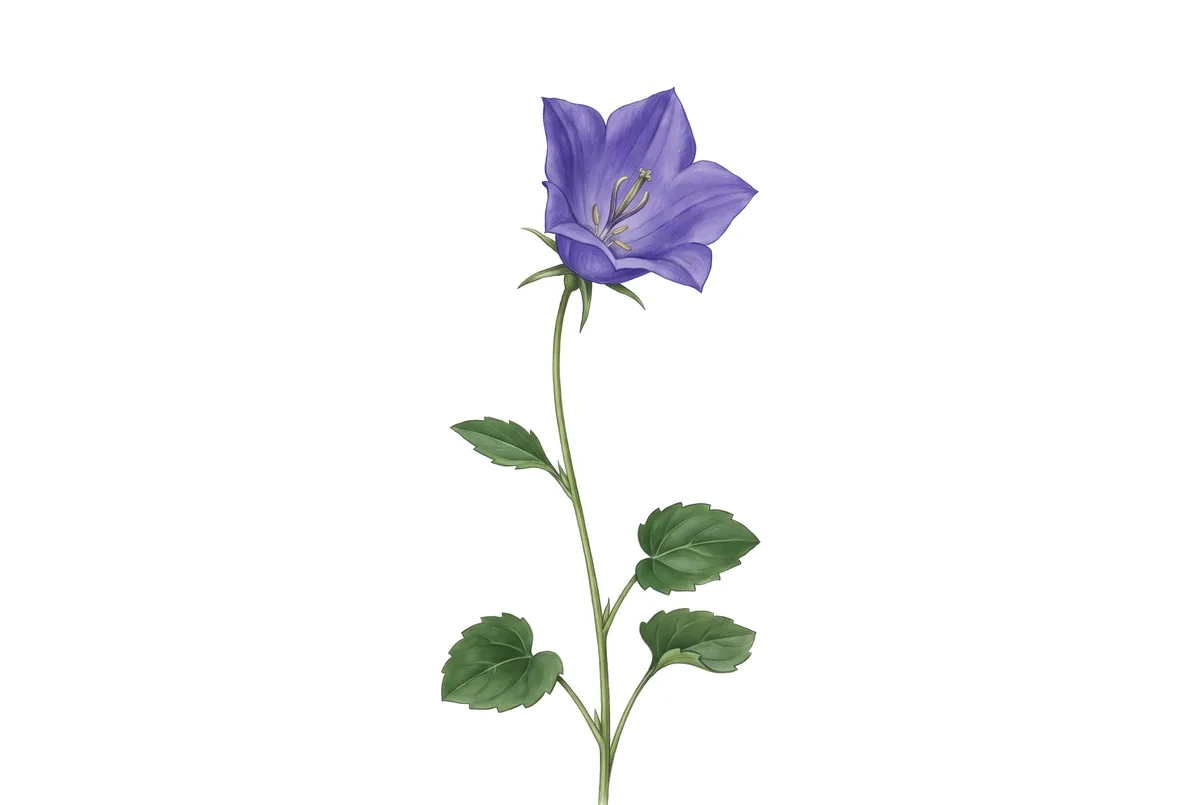
- Type
- Perennial
- Height
- 0.1 m to 0.4 m
- Spread
- 0.1 m to 0.6 m
- Flowers
- Violet-blue, late spring to early autumn
- Sun
- Full sun to partial shade (University of Wisconsin-Madison Extension; North Carolina State Extension; RHS; Kwantlen Polytechnic University)
- In Canada
- Naturalised
Growing tussock bellflower
Climate. No Canadian reference read gives a Canadian hardiness zone: Natural Resources Canada's plant hardiness site says there are not enough observations to build a model for it. Kwantlen Polytechnic University gives it as Zone 3 (-40 to -34 °C), without naming the scale, the University of Wisconsin-Madison Extension calls its 'Clips' series hardy to USDA zone 3, and North Carolina State Extension rates the species for USDA zones 3a to 8b; the RHS rates it H5 in Britain. North Carolina State Extension says plants tend to be short-lived in hot, humid areas where the nights stay warm.
Sun and soil. The University of Wisconsin-Madison Extension and North Carolina State Extension give full sun to partial shade in fertile, well-drained soil, and both say the plants do best with cool roots, so they mulch and water in dry weather; North Carolina adds that it will not tolerate soil that is too wet or too dry. Kwantlen gives a moderate water use.
Care. Both extension services deadhead spent flowers to prolong flowering. North Carolina State Extension divides the clumps every 2 to 4 years, in spring or late summer, to keep them vigorous. Both propagate it by division in spring or early summer; the University of Wisconsin-Madison Extension says the species also grows from seed but the named varieties may not come true, and North Carolina State Extension that seed may not be reliable.
Problems. Kwantlen and the RHS name slugs and snails. North Carolina State Extension and the RHS add powdery mildew and rust, and the University of Wisconsin-Madison Extension says of 'Blue Clips' that slugs can damage the tender new foliage and fungal pathogens occasionally attack the leaves.
Using tussock bellflower
Tussock bellflower is a plant for the front of a border, the rock garden and containers. The University of Wisconsin-Madison Extension also uses it as a groundcover in the mixed perennial border and for cut flowers, and says the flowers attract hummingbirds. Kwantlen Polytechnic University lists it for alpine and rock gardens, bedding, containers, groundcover, mixed and perennial borders and small gardens, and for attracting beneficial insects. North Carolina State Extension suggests groundcover in rock gardens, along border paths or in containers. Both extension services space plants 0.3 to 0.36 m apart. The City of Calgary lists harebell, Campanula rotundifolia or carpatica, among its water-wise YardSmart perennials, for full sun to part shade, with mounded clumps of purple bell-shaped flowers that bloom all summer.
What to check before you buy
Growers in the HortOS catalogue for Canada list tussock bellflower mostly under named selections: 'Blue Clips' and 'White Clips', 'Rapido Blue' and 'Rapido White', and the Uniform lines in blue and white. The City of Calgary warns not to confuse it with creeping bellflower, which it calls aggressively invasive. The table above shows the sizes growers list, by container class as the guide to plant grades and container sizes explains, and the checks on roots, pests and hardening off are in the guide to nursery plant quality.
Used forgroundcoverpots and courtyardspollinators and wildlife
Prices are set by each grower and shown ex tax. Availability is confirmed by the grower at order.
Common questions
- Who grows Campanula carpatica wholesale in Canada?
- 12 wholesale growers list Campanula carpatica on HortOS right now, each with their own pot sizes and trade prices. They are in Alberta, British Columbia, Manitoba, Quebec and Ontario. The growers are named on this page.
- What pot sizes does Campanula carpatica come in?
- Growers on HortOS list Campanula carpatica in 110mm, 1G, 2G, 28G, 33G and 3.5".
- How do I order Campanula carpatica from these growers?
- HortOS is for the trade. Add the lines you want to a list and send it: each grower gets their part of the order by email, confirms what they have and quotes freight, and nothing is bought until you approve it. Listing, searching and ordering are free.
- Is tussock bellflower native to Canada?
- No. North Carolina State Extension and the University of Wisconsin-Madison Extension say it comes from the Carpathian Mountains of eastern Europe. VASCAN, the Database of Vascular Plants of Canada, records it as introduced in Alberta.
- How tall does Campanula carpatica grow?
- The University of Wisconsin-Madison Extension gives a mound 15 to 20 cm tall and about 30 cm wide, North Carolina State Extension 10 to 30 cm tall and wide, and Kwantlen Polytechnic University 0.2 to 0.4 m tall and 0.3 to 0.6 m across. The RHS gives a clump to 30 cm.
- When does tussock bellflower flower?
- The RHS gives summer, and the University of Wisconsin-Madison Extension midsummer for several weeks, with a sparse rebloom sometimes into early autumn where summers are cool. Kwantlen gives June to September at peak, and North Carolina State Extension May to June.
- Is tussock bellflower the same plant as harebell?
- The names overlap. Kwantlen calls Campanula carpatica Carpathian harebell, and the RHS gives American harebell and Carpathian harebell among its other common names. The City of Calgary's list puts harebell under Campanula rotundifolia or carpatica, two species.
- Does tussock bellflower spread?
- Slowly. The University of Wisconsin-Madison Extension says it is not an aggressive runner and stays a compact clump for many years, and North Carolina State Extension says it spreads slowly by rhizomes. The City of Calgary warns not to confuse it with creeping bellflower, which it calls aggressively invasive.
- Do the named selections come true from seed?
- The University of Wisconsin-Madison Extension says the species can be grown from seed but the named varieties may not come true, and propagates them by dividing the clumps in spring or early summer.
Sources
- GBIF species match API
- VASCAN, the Database of Vascular Plants of Canada (Canadensys): Campanula carpatica
- Natural Resources Canada, Canada's Plant Hardiness Site: Campanula carpatica
- Kwantlen Polytechnic University, School of Horticulture, KPU Plant Database: Carpathian harebell
- City of Calgary, YardSmart plants: water-wise annuals and perennials
- North Carolina State Extension Gardener Plant Toolbox: Campanula carpatica
- University of Wisconsin-Madison Extension, Horticulture: Campanula carpatica 'Blue Clips' and 'White Clips'
- Royal Horticultural Society, Find a plant: Campanula carpatica
- The HortOS guides for Canada (plant grades and container sizes; nursery plant quality)
- The HortOS catalogue for Canada (the names growers list tussock bellflower under on ca.hortosapp.com)
The growers, sizes and prices above are live and change as lists arrive. Cite this page: HortOS, Tussock bellflower (Campanula carpatica), https://ca.hortosapp.com/plants/campanula-carpatica.
Found a fact that is wrong? Tell us and it is checked against its source.