Syringa patula
Lilac
Every Syringa patula on HortOS in one place: the plain species and 4 varieties. Pick a size to see it across all of them.
Part of Syringa: see them all
20 growers · 9 sizes · from $1.55 ex tax
- Type
- Deciduous shrub
- Height
- 1.2 m to 2.7 m
- Spread
- 1.5 m to 2.7 m
- Growth
- Slow
- Flowers
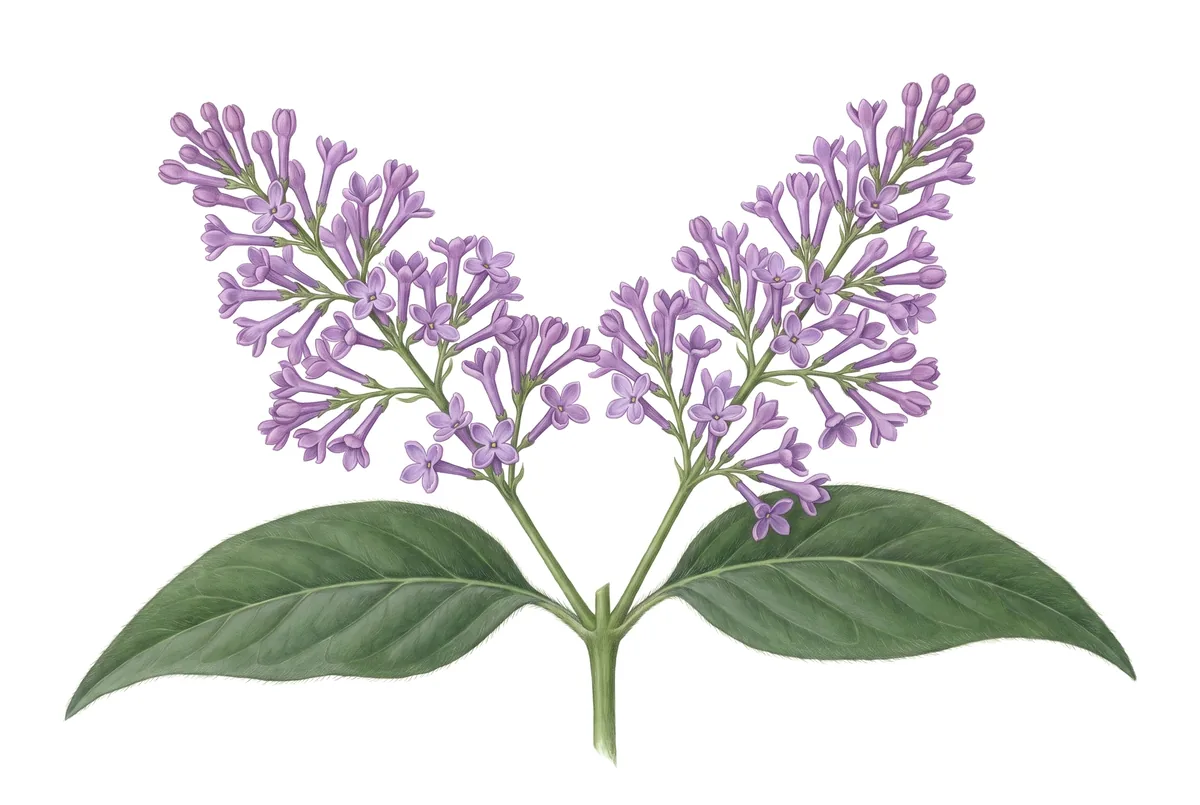
- Lilac-purple, late spring to early summer (NC State Extension)
- Sun
- Full sun for the most flowers, some shade tolerated (NC State Extension)
- In Canada
- Not native
Growing manchurian lilac
The name. GBIF, World Flora Online and Natural Resources Canada's plant hardiness site file this lilac as Syringa pubescens subsp. patula, with Syringa patula as a synonym, and the Missouri Plant Finder and NC State Extension use the subspecies name too. Canadian growers list it as Syringa patula. The same species holds Meyer lilac, filed as subspecies pubescens.
Site and soil. NC State Extension gives full sun for the most flowers, with some shade tolerated, in reasonably fertile, well-drained soil that never becomes waterlogged, neutral to slightly alkaline, near pH 7.0. It says the plant does best with good air circulation.
Hardiness. No Canadian reference read gives it a Canadian zone; Natural Resources Canada says it has too few observations to build a model. NC State Extension, an American reference, gives USDA zones 3a to 8b, which are not Canadian zones.
Pruning and pests. It flowers on old wood, so NC State Extension says to prune straight after flowering. It reports no serious insect or disease problems and excellent resistance to powdery mildew, with lilac blight, honey fungus, leaf-mining moth, thrips and willow scale possible.
Using manchurian lilac
NC State Extension calls the flowers showy and fragrant, good for cutting, says lilacs attract butterflies and hummingbirds, and gives the leaves a burgundy-red autumn colour. The plant Canadian gardens know is the cultivar Miss Kim: the City of Penticton plants it in its xeriscape garden, and the University of Saskatchewan's gardening pages praise it as compact and one of the most highly scented of the Ottawa breeder's hybrids, with long-lasting plum-purple autumn colour. Its sizes, uses and Canadian notes are on the Miss Kim page.
What to check before you buy
Canadian growers list this lilac by its cultivars, Miss Kim far ahead of Baby Kim and Dream Cloud, rather than as the wild plant, so read the cultivar on each line and compare like with like. Lines may carry either name, Syringa patula or Syringa pubescens subsp. patula. Canadian growers name a container by its class, as the guide to plant grades by market explains; the table above shows the sizes growers list. What to check before stock leaves the grower is in the guide to nursery plant quality.
Prices are set by each grower and shown ex tax. Availability is confirmed by the grower at order.
Common questions
- Who grows Syringa patula wholesale in Canada?
- 20 wholesale growers list Syringa patula on HortOS right now, each with their own pot sizes and trade prices. They are in British Columbia, Manitoba, Ontario, Quebec and Saskatchewan. The growers are named on this page.
- What pot sizes does Syringa patula come in?
- Growers on HortOS list Syringa patula in 21 plug tray, Quart, 1G, 2G, 3G, 5G, 7G, 10G and 50G.
- How do I order Syringa patula from these growers?
- HortOS is for the trade. Add the lines you want to a list and send it: each grower gets their part of the order by email, confirms what they have and quotes freight, and nothing is bought until you approve it. Listing, searching and ordering are free.
- Is Syringa patula the same as Syringa pubescens subsp. patula?
- Yes. GBIF, World Flora Online and Natural Resources Canada treat Syringa patula as a synonym of Syringa pubescens subsp. patula, the Manchurian lilac. Canadian growers still list it as Syringa patula.
- How big does Manchurian lilac grow?
- The Missouri Plant Finder gives up to about 2.7 m tall and as wide. NC State Extension gives 1.2 to 2.7 m tall and 1.5 to 2.1 m wide, and calls it slow growing.
- Is Manchurian lilac native to Canada?
- No. NC State Extension gives its home as north-eastern China, in Manchuria, to Korea, and it is grown in Canada as a garden plant.
- Does Manchurian lilac get powdery mildew?
- NC State Extension says it has excellent resistance to powdery mildew and more than other lilacs, but still does best where the air moves freely around it.
- When should Manchurian lilac be pruned?
- Straight after flowering, NC State Extension says, because the plant flowers on old wood. The same reference gives softwood cuttings, grafting or chip budding to propagate it.
Sources
- GBIF species match API (Syringa patula, a synonym of Syringa pubescens subsp. patula)
- World Flora Online name matching: Syringa patula (placed under Syringa pubescens subsp. patula)
- VASCAN, the Database of Vascular Plants of Canada (Canadensys): search for Syringa patula and Syringa pubescens subsp. patula
- Natural Resources Canada, Canada's Plant Hardiness Site: Syringa pubescens subsp. patula (Manchurian lilac)
- NC State Extension Gardener Plant Toolbox: Syringa pubescens subsp. patula
- Missouri Botanical Garden Plant Finder: Syringa pubescens subsp. patula 'Miss Kim', with its account of the subspecies
- University of Saskatchewan, Gardening at USask: Lilacs
- City of Penticton, Parks and Recreation: Xeriscape Garden plant list
- The HortOS catalogue for Canada (the names growers list Syringa patula and its cultivars under on ca.hortosapp.com)
- The HortOS guides for Canada: plant grades and container sizes by market; judging nursery plant quality
The growers, sizes and prices above are live and change as lists arrive. Cite this page: HortOS, Manchurian lilac (Syringa pubescens subsp. patula), https://ca.hortosapp.com/plants/syringa-patula.
Found a fact that is wrong? Tell us and it is checked against its source.