Prunus serrulata 'Kanzan'
Japanese flowering cherry
One of 12 Prunus serrulata varieties: see them all
5 growers · 10 sizes · from $26.00 ex tax
- Type
- Deciduous tree
- Height
- 7.5 m to 12 m
- Spread
- 7.5 m to 12 m
- Flowers
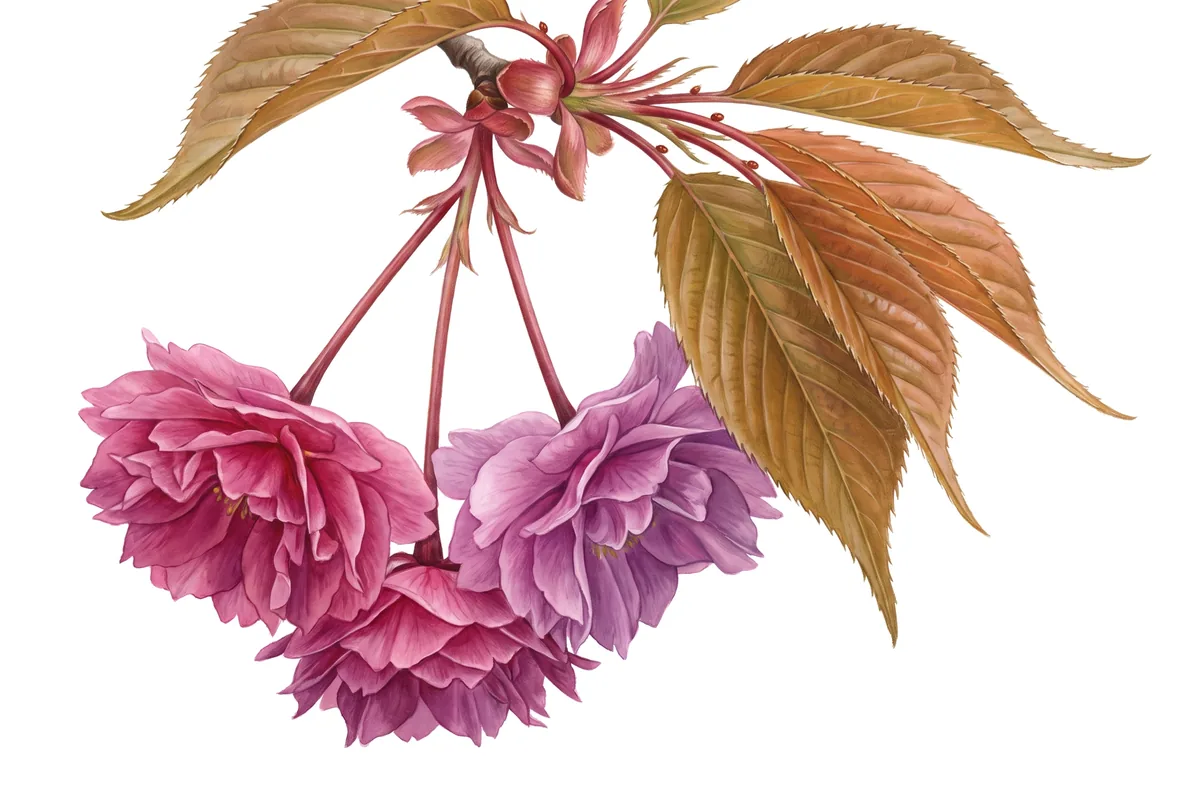
- Deep pink, spring
- Sun
- Full sun, tolerating light shade, by the Missouri Plant Finder
- In Canada
- Not native
| Size | Grower | PricePrice ex tax | ||
|---|---|---|---|---|
| 60mm | Cedar Rim Nursery Ltd60mm | Price on application. Sign in to ask the grower. | ||
| 70mm | Cedar Rim Nursery Ltd70mm | Price on application. Sign in to ask the grower. | ||
| 15G | Dasmesh Nursery Ltd15G | $110.00 | ||
| 15G | Hillen Nursery Ltd.15G | $115.00 | ||
| B&B | Peels Native Plants LtdB&B | Price on application. Sign in to ask the grower. | ||
| 5-6' bare root | Maple Leaf Nursery Div. of PBN Nurseries Ltd.5-6' bare root | $26.00 | ||
| 6-7' bare root | Maple Leaf Nursery Div. of PBN Nurseries Ltd.6-7' bare root | $28.50 | ||
| 7-8' bare root | Maple Leaf Nursery Div. of PBN Nurseries Ltd.7-8' bare root | $33.00 | ||
| 32 mm cal. bare root | Maple Leaf Nursery Div. of PBN Nurseries Ltd.32 mm cal. bare root | $41.50 | ||
| 44 mm cal b&b | Maple Leaf Nursery Div. of PBN Nurseries Ltd.44 mm cal b&b | $135.00 | ||
| 51 mm cal b&b | Maple Leaf Nursery Div. of PBN Nurseries Ltd.51 mm cal b&b | $150.00 |
Also grown by 2 nurseries (no sizes or prices listed)
Enquire with them for sizes and prices.
- East Richmond Nurseries Inc.Richmond, British Columbia
- Pépinière A. MasséSaint-Césaire, Quebec
Growing kwanzan cherry
Climate. No Canadian reference read gives a hardiness zone for Kanzan itself. American references give USDA zones 5 to 9, which are not Canadian zones, and the British RHS rates it H6, hardy in all of the UK and northern Europe. In Vancouver, the UBC Botanical Garden calls it one of the healthiest and most robust of all cultivars, even where it is planted in what appears to be little or no soil. The Garden calls it fast-growing; NC State gives a medium growth rate.
Site and soil. The Missouri Plant Finder, an American reference, says it is best grown in moist, moderately fertile, well-drained loams in full sun, and that it tolerates light shade but flowers best in full sun.
Pruning. The Missouri Plant Finder says it generally needs little pruning, done after flowering if necessary. The RHS says to prune in midsummer if silver leaf is a problem.
Pests and problems. The UBC Botanical Garden says the trunks of older trees in Vancouver are invariably swollen with large cankers from a systemic bacterial disease, and that while most other cherries are worn down by it, Kanzan just keeps going. American references list leaf spot, dieback, leaf curl, powdery mildew, root rot and fireblight among its diseases and aphids, scale, borers and Japanese beetles among its insects, and the Missouri Plant Finder says it may be short lived.
Using kwanzan cherry
Kanzan is planted as a flowering tree for streets, parks and specimens. The Missouri Plant Finder, an American reference, calls it a good selection for streets, parks and other public areas, as a specimen or in small groups. Trees and Shrubs Online calls it the most widely planted of the Sato Zakura, of the right habit for street planting. The Town of Oakville in Ontario gives Kwanzan cherry a small canopy stature on its list of trees for planting and replacement.
The UBC Botanical Garden adds a caution from Vancouver: it is normally too large for most residential settings, and its size makes it vulnerable in street plantings, where a few branches are always cut back by trucks. The guide to specifying and procuring trees covers how a street tree order is written.
What to check before you buy
Canadian growers list it as Prunus serrulata 'Kwanzan', Prunus Kwanzan, Prunus ser. 'Kwanzan' and Prunus 'Kanzan', as field-grown trees by calliper, bare root or balled and burlapped, and in #15 containers; some lines are top-grafted, which the Missouri Plant Finder says is sometimes done with Kanzan. The table above shows the sizes growers list. Canadian growers grade advanced trees by calliper, as the guide to plant grades and container sizes explains.
Cautions
For cherries (Prunus species), the ASPCA lists the plant as toxic to dogs, cats and horses, the stems, leaves and seeds containing cyanogenic glycosides.
Used forspecimenstreet and avenue
Prices are set by each grower and shown ex tax. Availability is confirmed by the grower at order.
Common questions
- Who grows Prunus serrulata 'Kanzan' wholesale in Canada?
- 5 wholesale growers list Prunus serrulata 'Kanzan' on HortOS right now, each with their own pot sizes and trade prices. They are in British Columbia and Ontario. The growers are named on this page.
- What pot sizes does Prunus serrulata 'Kanzan' come in?
- Growers on HortOS list Prunus serrulata 'Kanzan' in 60mm, 70mm, 15G, B&B, 5-6' bare root, 6-7' bare root, 7-8' bare root, 32 mm cal. bare root, 44 mm cal b&b and 51 mm cal b&b.
- How do I order Prunus serrulata 'Kanzan' from these growers?
- HortOS is for the trade. Add the lines you want to a list and send it: each grower gets their part of the order by email, confirms what they have and quotes freight, and nothing is bought until you approve it. Listing, searching and ordering are free.
- Is Kwanzan the same cherry as Kanzan?
- Yes. Trees and Shrubs Online says Kanzan is usually spelt Kwanzan in the USA, and that Kanzan and Sekiyama are two renderings of one name, a Chinese mountain sacred to Buddhists. The RHS accepts the name Prunus 'Kanzan' and lists Prunus serrulata 'Kanzan' and Prunus 'Sekiyama' among its synonyms.
- How big does a Kanzan cherry grow?
- The Missouri Plant Finder gives 7.5 to 9 m tall and wide and Trees and Shrubs Online ultimately about 12 m high and as wide; the RHS puts it in its 8 to 12 m height class. The UBC Botanical Garden gives a crown up to 15 m tall.
- Does Kanzan bear fruit?
- The Missouri Plant Finder says the plants are sterile and do not produce fruit. NC State, also an American reference, describes a round black drupe ripening in summer.
- When does Kanzan flower?
- The Missouri Plant Finder gives April, just before and as the leaves emerge, and the UBC Botanical Garden gives April or May, with long-lasting flowers.
Sources
- ASPCA Animal Poison Control, Toxic and Non-Toxic Plants: Cherry (Prunus species)
- Royal Horticultural Society (RHS), plant profile: Prunus 'Kanzan'
- Missouri Botanical Garden Plant Finder: Prunus 'Kanzan'
- North Carolina State Extension Gardener Plant Toolbox: Prunus 'Kanzan'
- Trees and Shrubs Online (International Dendrology Society): Prunus serrulata, with the Japanese garden cherries
- UBC Botanical Garden (University of British Columbia), blog: April 2020 in the Neighbourhood (Prunus 'Kanzan')
- Town of Oakville (Ontario), Forestry: Tree stature for planting and replacement
- The HortOS guides for Canada (plant grades and container sizes; specifying and procuring trees)
- The HortOS catalogue for Canada (the lines growers list as Kwanzan and Kanzan)
The growers, sizes and prices above are live and change as lists arrive. Cite this page: HortOS, Kwanzan cherry (Prunus 'Kanzan'), https://ca.hortosapp.com/plants/prunus-serrulata-kanzan.
Found a fact that is wrong? Tell us and it is checked against its source.