Paeonia lactiflora
Peony
Every Paeonia lactiflora on HortOS in one place: the plain species and 16 varieties. Pick a size to see it across all of them.
Part of Paeonia: see them all
15 growers · 5 sizes · from $10.00 ex tax
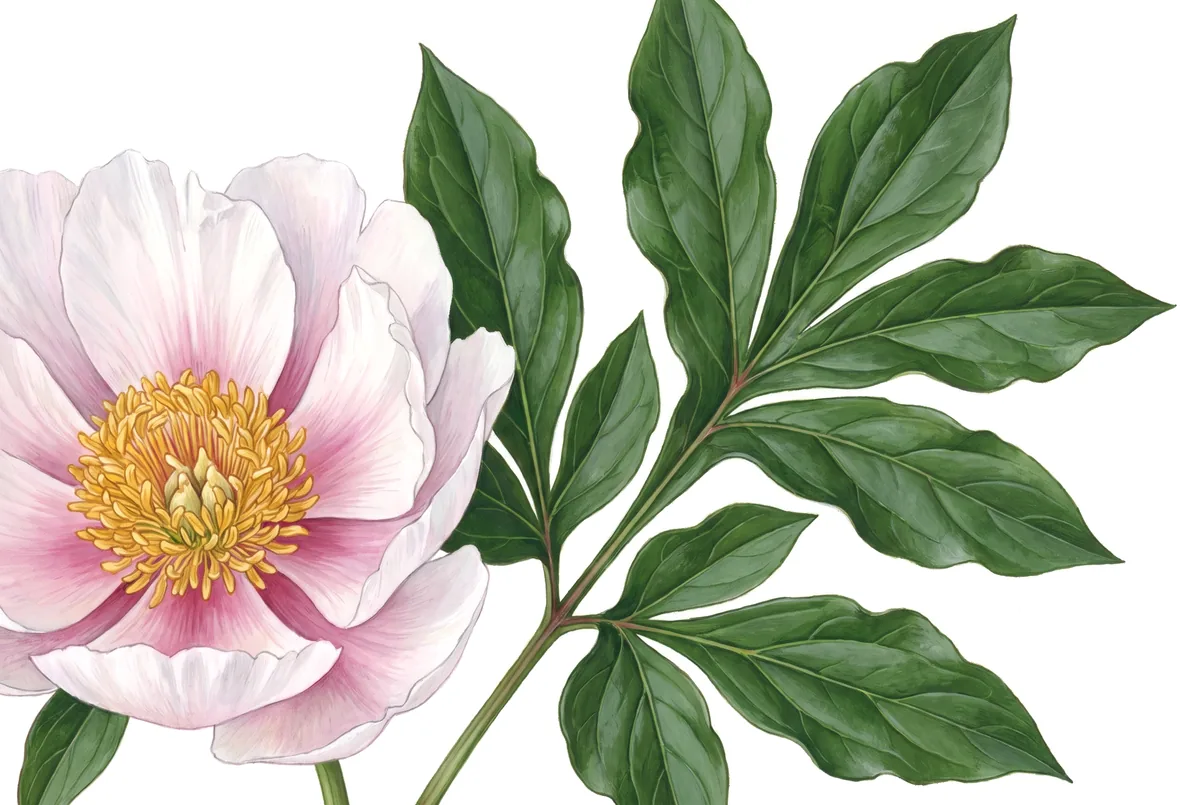
- Type
- Perennial
- Height
- 0.45 m to 0.75 m
- Spread
- 0.45 m to 0.75 m
- Flowers
- White, late spring to early summer (Saskatchewan Perennial Society); mid to late spring (Missouri Plant Finder)
- Sun
- Full sun, at least six hours a day (Canadian Peony Society, Saskatchewan Perennial Society)
- Drought
- Tolerant
- Hardiness
- Canadian zones 4b to 7b (Natural Resources Canada, observed range)
- In Canada
- Naturalised
Also grown by 2 nurseries (no sizes or prices listed)
Enquire with them for sizes and prices.
- J.C. Bakker & Sons Ltd.St. Catharines, Ontario
- Van Noort Bulb Co. Ltd.Langley Township, British Columbia
Growing chinese peony
Hardiness. Natural Resources Canada's records show Chinese peony growing in zones 4b to 7b in Canada (74 observations), where it has been observed, not a rating. The Missouri Plant Finder, an American reference, rates it for USDA zones 3 to 8, says the plant needs a cold winter dormant season, and suggests mulching the roots in winter where snow cover is minimal.
Site and soil. The Saskatchewan Perennial Society plants in full sun, well away from tree roots, in well-drained soil generously amended with well-rotted manure or compost. The Canadian Peony Society asks for at least six hours of sun and well-drained soil rich in organic matter, and never plants a peony where another peony has grown.
Depth. Both societies keep the buds, or eyes, no more than about 5 cm below the soil; the Canadian Peony Society says planting too low or too high hinders flowering.
Water. The Saskatchewan Perennial Society waters deeply at planting and keeps the soil evenly moist for the first several years, after which established plants are very drought tolerant. The Canadian Peony Society calls them reasonably drought resistant once established and prefers drip irrigation to overhead watering, to reduce fungal disease.
Care and problems. The Canadian Peony Society leaves the foliage standing until frost, so the plant can store food for the next year, then cuts it to about 2.5 cm and puts it in the garbage, since it can carry fungal organisms over winter. Both societies name botrytis blight. The Saskatchewan society says ants on the buds are neither helpful nor harmful, and that older double forms with heavy flowers and weak stems need hoops or other support.
Using chinese peony
Garden peonies are border plants and cut flowers. The Saskatchewan Perennial Society places them in the perennial border, calls them excellent in fresh or dried arrangements, and spaces them 1 m from each other and from other plants. The Missouri Plant Finder uses them as specimens and in groups, and as accents or herbaceous hedges along fences, walks, drives and walls.
Peonies are long-lived and can be left undisturbed for years, by both the Saskatchewan society and the Missouri Plant Finder. The society divides them in September or early October, each piece with a section of root and crown and three to five eyes, and the Canadian Peony Society says a root with three to five eyes generally flowers within two years. The Saskatchewan society adds that most take up to five years to show their mature flower.
Canadian growers list Chinese peony mostly as named cultivars, among them the old white double 'Duchesse de Nemours'. The genus page, peonies, sets out the garden, tree and Itoh peonies side by side.
What to check before you buy
Peonies are sold as roots and in pots. The Canadian Peony Society plants freshly dug roots in autumn and potted roots at any time of year. Named cultivars do not come true from seed and must be propagated vegetatively, by the Canadian Peony Society; check the name on each grower's line, since the straight species and its cultivars are listed separately. Canadian growers name containers by class, #1, #2, #3, #5 and #10, as the guide to plant grades and container sizes explains; the table above shows the sizes growers list. For roots, pests and hardening off, see the guide to nursery plant quality.
Cautions
For the genus, the ASPCA lists peony, under the European species Paeonia officinalis, as toxic to dogs, cats and horses, naming paeonol as the toxic principle and vomiting, diarrhoea and depression as the signs.
Used forspecimenmass plantingcut flower
Prices are set by each grower and shown ex tax. Availability is confirmed by the grower at order.
Common questions
- Who grows Paeonia lactiflora wholesale in Canada?
- 15 wholesale growers list Paeonia lactiflora on HortOS right now, each with their own pot sizes and trade prices. They are in Ontario, British Columbia, Alberta, Manitoba, Quebec and Nova Scotia. The growers are named on this page.
- What pot sizes does Paeonia lactiflora come in?
- Growers on HortOS list Paeonia lactiflora in 36", 150mm, 1G, 2G and Bare Root.
- How do I order Paeonia lactiflora from these growers?
- HortOS is for the trade. Add the lines you want to a list and send it: each grower gets their part of the order by email, confirms what they have and quotes freight, and nothing is bought until you approve it. Listing, searching and ordering are free.
- Is Chinese peony native to Canada?
- No. VASCAN, the Database of Vascular Plants of Canada, records it as introduced in Ontario. The Missouri Plant Finder gives its home as central Asia, from eastern Siberia to Mongolia, eastern Tibet and northern China, and the Saskatchewan Perennial Society as China and Japan.
- Is Chinese peony hardy on the Prairies?
- The Saskatchewan Perennial Society says garden peonies have been a standard in prairie gardens for over a century for their cold hardiness. The Missouri Plant Finder, an American reference, rates it for USDA zones 3 to 8. Natural Resources Canada's records show it growing in zones 4b to 7b in Canada, which is where it has been observed, not a rating.
- How deep should a peony root be planted?
- With the buds, or eyes, no more than about 5 cm below the soil, by both the Saskatchewan Perennial Society and the Canadian Peony Society. The Missouri Plant Finder lists planting too deep or too shallow among the reasons a peony does not flower.
- Why is my peony not flowering?
- The Missouri Plant Finder gives four common causes: planted too deep or too shallow, too much shade, flower buds killed by a late frost, or a plant that is too young or was recently moved. The Saskatchewan Perennial Society says most peonies take up to five years to show their mature flower.
- When should peonies be cut back?
- After frost, not straight after flowering. The Canadian Peony Society says cutting the foliage early removes the plant's ability to store food for the next year; in late autumn it cuts herbaceous stems to about 2.5 cm and puts the foliage in the garbage.
- What does lactiflora mean?
- With milky flowers, by the Saskatchewan Perennial Society, which says the species was first brought into England from China in 1805 and is the source of thousands of garden hybrids.
Sources
- GBIF species match API: Paeonia lactiflora
- VASCAN, the Database of Vascular Plants of Canada (Canadensys): Paeonia lactiflora
- ASPCA Animal Poison Control, toxic and non-toxic plants: Peony (Paeonia officinalis)
- Natural Resources Canada, Canada's Plant Hardiness Site: Paeonia lactiflora
- Saskatchewan Perennial Society, gardening columns: Peonies, part I, and Peonies a-plenty, part II
- Canadian Peony Society: planting, care, drying, cutting and storing
- Missouri Botanical Garden Plant Finder: Paeonia lactiflora (an American reference, for the plant's nature)
- Missouri Botanical Garden Plant Finder: Paeonia lactiflora (an American reference, for how it grows)
- The HortOS catalogue for Canada (the rows growers list under Paeonia lactiflora on ca.hortosapp.com)
- The HortOS guides for Canada (plant grades and container sizes by market; judging nursery plant quality)
The growers, sizes and prices above are live and change as lists arrive. Cite this page: HortOS, Chinese peony (Paeonia lactiflora), https://ca.hortosapp.com/plants/paeonia-lactiflora.
Found a fact that is wrong? Tell us and it is checked against its source.