Melia azedarach
Chinaberry / China Bal
2 growers · 2 sizes · from $24.99 ex tax
- Type
- Deciduous tree
- Height
- 9 m to 12 m
- Spread
- 6 m to 12 m
- Growth
- Fast
- Flowers
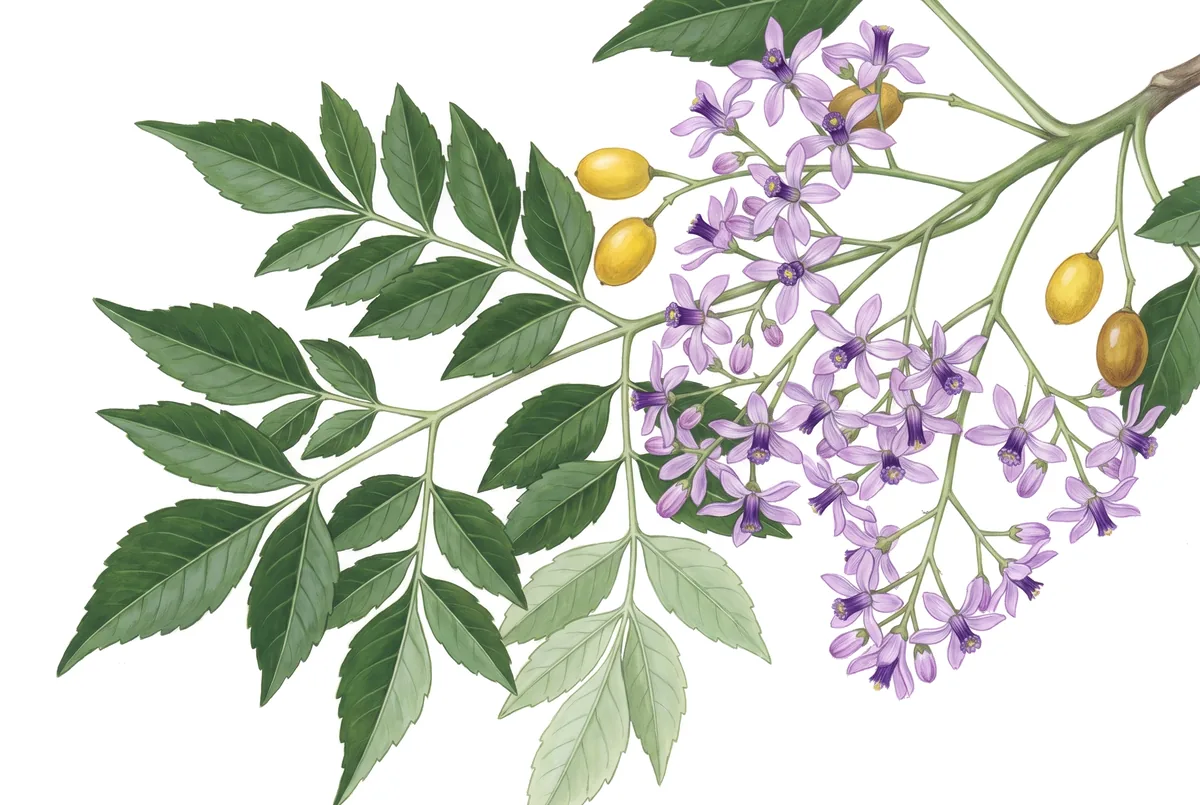
- Lilac, late winter to summer
- Sun
- Full sun
- Drought
- Tolerant
- Frost
- Moderate frost
- In Canada
- Not native
| Size | Grower | PricePrice ex tax | ||
|---|---|---|---|---|
| 2G | HC Gardens2G | $24.99 | ||
| Bare Root | Greenlife Wholesale NurseryBare Root | Price on application. Sign in to ask the grower. |
Also grown by 5 nurseries (no sizes or prices listed)
Enquire with them for sizes and prices.
- Bijkerkville TreesOttawa, Ontario
- Grow Wild! Native Plant Nursery, Landscaping and Biological ConsultingKawartha Lakes, Ontario
- Heavenly EarthChatham-Kent, Ontario
- Lucan Country GardensNorth Middlesex, Ontario
- South Gate NurseryWaterloo, Ontario
Growing chinaberry
Hardiness. No Canadian reference read gives a Canadian hardiness zone for chinaberry. North Carolina State Extension, an American reference, gives USDA zones 7a to 10b. Its home is a wide area from India through China to Australia, by the same reference.
Site and soil. North Carolina State Extension gives full sun and a well-drained clay, loam or sand, and says it takes a wide range of soils and many conditions, and does well on disturbed ground.
Growth and upkeep. The same reference calls it fast growing, with a rounded crown of stiff, coarse branches, rates its upkeep as high, and tags it for weak wood and as messy. The leaves turn yellow in autumn, and the fruit can stay on the bare tree through winter into spring.
Problems. North Carolina State Extension calls it virtually disease-free. It also calls it weedy and invasive in North Carolina and elsewhere in the American Southeast; in North Carolina it comes up along roads, in forest openings and in thickets and fields.
Using chinaberry
North Carolina State Extension says chinaberry has been grown as an ornamental, as a shade tree and for fuelwood, and names three forms: 'Floribunda', a dwarf, sparsely branched cultivar; 'Jade Snowflake', with leaves variegated white; and 'Umbraculiformis', the Texas umbrella tree, multi-stemmed with an umbrella-shaped crown. It says the cultivars keep many of the species' weedy, aggressive tendencies and are not recommended for any garden. Birds eat the fruit, by the same reference.
No reference read gives planting centres. Where a tree is specified, the guide to specifying and procuring trees covers writing an order to the Canadian Nursery Stock Standard.
What to check before you buy
Growers on the HortOS catalogue for Canada list it as Melia azedarach, under the common name chinaberry. Weigh the drawbacks first: North Carolina State Extension calls it invasive in North Carolina and elsewhere in the American Southeast, rates it high maintenance and warns of weak wood, and the cautions below give its toxicity. Canadian growers name containers by class and grade field trees by calliper, as the guide to plant grades and container sizes explains; the table above shows the sizes growers list.
Cautions
The ASPCA lists chinaberry tree as toxic to dogs, cats and horses: the ripe fruit most of all, but also the bark, leaves and flowers. North Carolina State Extension says the fruit, and a tea made from the leaves, are poisonous to people and to some livestock, though it notes that harm comes only when large quantities are eaten.
Used forspecimenstreet and avenueshade
Prices are set by each grower and shown ex tax. Availability is confirmed by the grower at order.
Common questions
- Who grows Melia azedarach wholesale in Canada?
- 2 wholesale growers list Melia azedarach on HortOS right now, each with their own pot sizes and trade prices. They are in Ontario. The growers are named on this page.
- What pot sizes does Melia azedarach come in?
- Growers on HortOS list Melia azedarach in 2G and Bare Root.
- How do I order Melia azedarach from these growers?
- HortOS is for the trade. Add the lines you want to a list and send it: each grower gets their part of the order by email, confirms what they have and quotes freight, and nothing is bought until you approve it. Listing, searching and ordering are free.
- Is chinaberry hardy in Canada?
- No Canadian reference read gives it a Canadian hardiness zone. North Carolina State Extension, an American reference, gives USDA zones 7a to 10b.
- How big does chinaberry grow?
- North Carolina State Extension gives 9 to 12 m tall and as wide, with a rounded crown, and calls it fast growing.
- Is chinaberry poisonous?
- Yes. The ASPCA lists it as toxic to dogs, cats and horses, the ripe fruit most of all, and North Carolina State Extension says the fruit and a tea of the leaves are poisonous to people too.
- Is chinaberry invasive?
- In the American Southeast it is, by North Carolina State Extension, which lists it as invasive in North Carolina and other southern states and says its cultivars are not recommended for any garden.
- Where does chinaberry come from?
- From a wide area running from India through China to Australia, by North Carolina State Extension. It is not native to Canada.
Sources
- GBIF species match API
- ASPCA Animal Poison Control Center, Toxic and Non-Toxic Plants: Chinaberry Tree (Melia azedarach)
- North Carolina State Extension Gardener Plant Toolbox: Melia azedarach
- VASCAN, the Database of Vascular Plants of Canada (Canadensys): name search for Melia azedarach
- Natural Resources Canada, Canada's Plant Hardiness Site: Melia azedarach
- The HortOS catalogue for Canada (the names growers list it under on ca.hortosapp.com)
- The HortOS guides for Canada (plant grades and container sizes; specifying and procuring trees)
The growers, sizes and prices above are live and change as lists arrive. Cite this page: HortOS, Chinaberry (Melia azedarach), https://ca.hortosapp.com/plants/melia-azedarach.
Found a fact that is wrong? Tell us and it is checked against its source.