Lonicera caerulea
honeysuckle
Every Lonicera caerulea on HortOS in one place: the plain species and 8 varieties. Pick a size to see it across all of them.
Part of Lonicera: see them all
13 growers · 11 sizes · from $1.00 ex tax
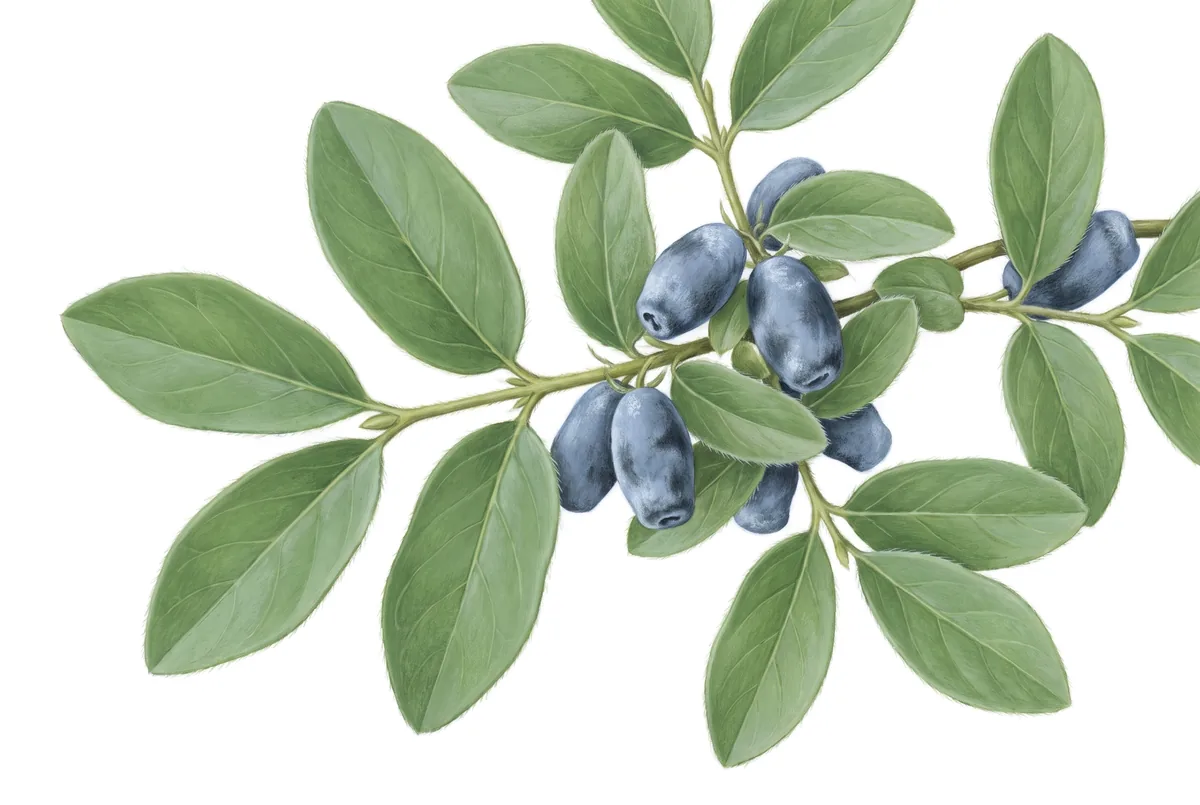
- Type
- Deciduous shrub
- Height
- 1.2 m to 2.5 m
- Spread
- 1.2 m
- Flowers
- Yellow, early spring, the first shrub to flower, by the University of Saskatchewan
- Sun
- Full sun; part sun gives less fruit, and part shade or shade does not suit it, by the University of Saskatchewan
- Hardiness
- Canadian zones 0a to 8a (Natural Resources Canada, observed range)
- In Canada
- Native
Also grown by 2 nurseries (no sizes or prices listed)
Enquire with them for sizes and prices.
- Blomidon NurseriesWolfville, Nova Scotia
- Pépinière SoleilSaint-Jean-Baptiste, Quebec
Growing haskap
Name and status. VASCAN accepts Lonicera caerulea and treats the wild North American forms once named Lonicera villosa, L. caerulea var. villosa and var. cauriana as synonyms. It gives the species as native in Alberta, Saskatchewan, Manitoba, Ontario, Quebec, New Brunswick, Nova Scotia, Prince Edward Island, Newfoundland and Labrador, and Nunavut. The University of Saskatchewan says wild haskaps are found throughout Canada except British Columbia and Yukon.
Hardiness. Natural Resources Canada's records show it growing in Canadian zones 0a to 8a. The University of Saskatchewan calls haskaps hardy to zones 1 to 4, without naming the scale, and its fruit programme writes that open haskap flowers take seven degrees of frost without damage.
Site and soil. Haskaps do best in full sun; part sun gives less fruit, and the University of Saskatchewan says part shade or deep shade does not suit it. It takes most soils, does best in well-drained loam or sandy loam, and tolerates clay where the site drains. The roots are wide but shallow, so grass and other plants are kept about 1 m from a young plant, under a thick mulch kept off the stems.
Water. Keep new plants moist but not waterlogged for 2 to 3 weeks, then give about 2.5 cm of water a week unless it rains; established plants, after 2 to 3 years, need little.
Pruning and problems. Little pruning is needed: in autumn or winter, thin a few branches at the base, and cut an old, unproductive plant to about 15 cm to renew it. Birds are the commonest problem. The RHS, in Britain, reports honeysuckle aphids, thrips, glasshouse whitefly and powdery mildew.
Using haskap
Pollination decides the planting. Haskaps are self-incompatible: each plant needs a different, pollen-compatible variety that blooms at the same time, and bees and other insects carry the pollen. There are no male and female plants; both varieties of a pair bear fruit. The University of Saskatchewan's compatibility chart rates its varieties in pairs, and its trials found Aurora and Honey Bee the most productive of the early blooming and ripening varieties, to be planted together.
In the garden the University of Saskatchewan places haskaps in a mulched shrub or perennial border, in a large island bed among well-spaced perennials, or as a short edible hedge, with at least 1 m between plants. Fruit can start as little as a year after planting, a few berries at first. Birds strip unnetted bushes, so netting goes on before the berries turn from green to blue, and berries can look ripe 5 to 10 days before they are ripe inside. Russian cultivars such as Berry Blue ripen earliest, with smaller berries in the University of Saskatchewan's table.
What to check before you buy
Buy at least two varieties that are compatible and bloom together; the University of Saskatchewan's chart names the pairs, and a single variety cannot pollinate itself. Some nurseries pot two compatible varieties in one container and label them male and female, a label the University of Saskatchewan calls a misconception. It also notes that haskaps are patented plants, propagated for commercial sale only by licensed propagators, and that haskaps are sold as small plugs or whips and as larger container plants; container classes are explained in the guide to plant grades and container sizes, and the root checks in the guide to nursery plant quality. The table above shows the sizes growers list.
Prices are set by each grower and shown ex tax. Availability is confirmed by the grower at order.
Common questions
- Who grows Lonicera caerulea wholesale in Canada?
- 13 wholesale growers list Lonicera caerulea on HortOS right now, each with their own pot sizes and trade prices. They are in Alberta, British Columbia, Saskatchewan, Manitoba, Ontario and Quebec. The growers are named on this page.
- What pot sizes does Lonicera caerulea come in?
- Growers on HortOS list Lonicera caerulea in Plug, Quart, 1G, 2G, 4G, 5G, 7G, 26G, 31G, 80G and 1 more sizes.
- How do I order Lonicera caerulea from these growers?
- HortOS is for the trade. Add the lines you want to a list and send it: each grower gets their part of the order by email, confirms what they have and quotes freight, and nothing is bought until you approve it. Listing, searching and ordering are free.
- Is haskap the same plant as honeyberry?
- Both names are used for Lonicera caerulea: Natural Resources Canada lists haskap, honeyberry, sweetberry and blue honeysuckle for the one species. The University of Wisconsin-Madison's Uncommon Fruit project says honeyberry refers to a group of subspecies, edulis among them, and haskap to the Japanese subspecies, and that breeding has blurred the distinction, so haskap has become more a term for fruit quality than for a subspecies.
- Does a haskap need a second plant to fruit?
- Yes. The University of Saskatchewan says haskaps are self-incompatible, so a plant needs another variety that is compatible and blooms at the same time, and bees to carry the pollen. Both plants of the pair bear fruit.
- Is haskap native to Canada?
- Yes. VASCAN gives Lonicera caerulea as native in nine provinces and Nunavut, from Alberta east to Newfoundland and Labrador, and folds the wild North American forms into the one species. The University of Saskatchewan says wild haskaps are found throughout Canada except British Columbia and Yukon.
- When do haskap berries ripen?
- Early: the University of Saskatchewan's fruit programme says around mid-June, and its gardening pages give late June to early July after flowers in early May. The berries can turn deep blue 5 to 10 days before they are ripe inside, so taste a few before picking.
- Can haskap be grown from seed?
- The species can: the RHS gives seed, sown with the berry flesh removed, as well as semi-hardwood and hardwood cuttings. Named varieties cannot, because their seed does not come true; the University of Saskatchewan propagates its varieties through tissue culture, and they are sold only from licensed propagators.
- How hardy is haskap?
- Natural Resources Canada's records show it growing in Canadian zones 0a to 8a, and the University of Saskatchewan calls haskaps hardy to zones 1 to 4, without naming the scale. The RHS rates the species H7, hardy in the severest European continental climates.
Sources
- GBIF species match API: Lonicera caerulea
- VASCAN, the Database of Vascular Plants of Canada (Canadensys): Lonicera caerulea
- Natural Resources Canada, Canada's Plant Hardiness Site: Lonicera caerulea
- University of Saskatchewan, Gardening at USask (Gardenline): Haskaps
- University of Saskatchewan Fruit Program: Haskap varieties
- University of Saskatchewan Fruit Program: 'Aurora' and 'Borealis' haskap
- RHS (Royal Horticultural Society) plant finder: Lonicera caerulea
- Go Botany (Native Plant Trust): Lonicera villosa, mountain honeysuckle
- Trees and Shrubs Online (International Dendrology Society): Lonicera caerulea
- University of Wisconsin-Madison, Uncommon Fruits for the Upper Midwest: Honeyberry
- The HortOS guides for Canada (plant grades and container sizes; nursery plant quality)
The growers, sizes and prices above are live and change as lists arrive. Cite this page: HortOS, haskap (Lonicera caerulea), https://ca.hortosapp.com/plants/lonicera-caerulea.
Found a fact that is wrong? Tell us and it is checked against its source.