Ligularia stenocephala
Ragwort / Leopard Plant
Part of Ligularia: see them all
No grower lists this plant right now
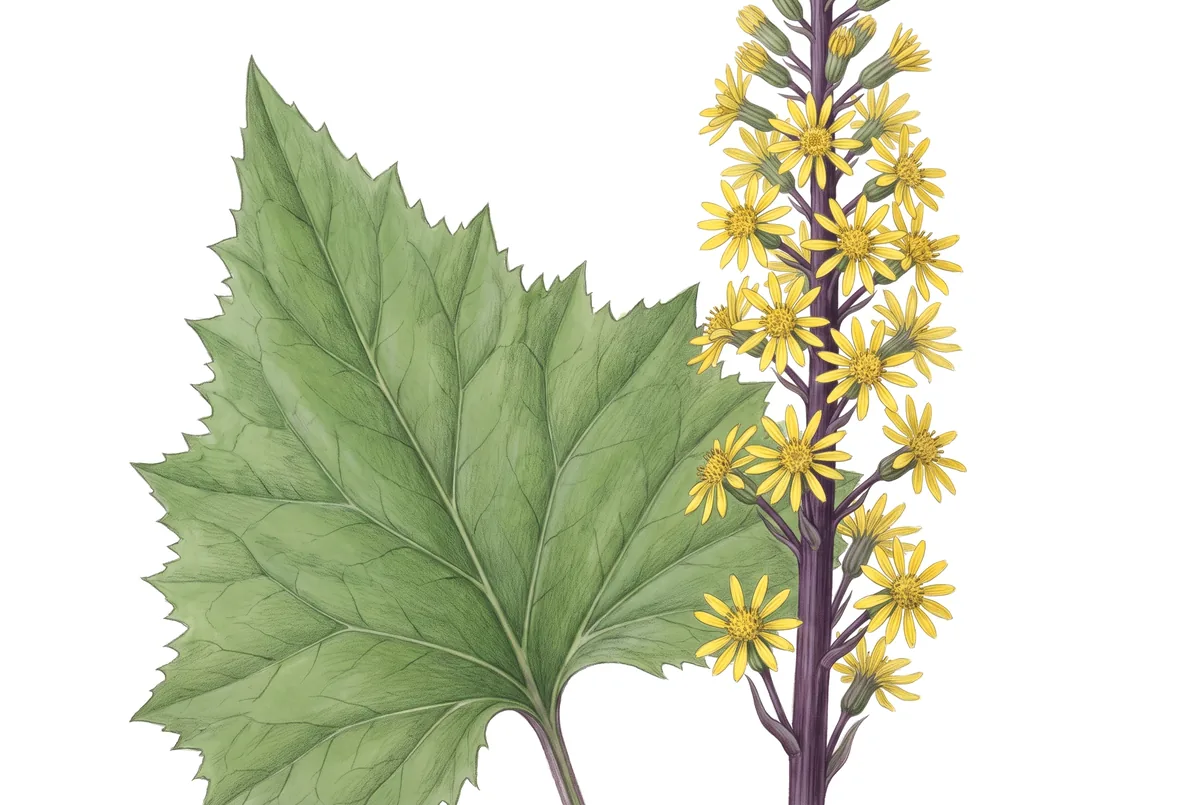
- Type
- Deciduous perennial
- Height
- 1 m to 1.5 m
- Flowers
- Yellow, summer to early autumn
- Sun
- Partial shade (RHS, British; NC State, American)
- In Canada
- Not native
Growing narrow-spiked ligularia
The RHS asks for rich, moist soil in partial shade and says a more open position is tolerated if the soil stays reliably moist; NC State, an American reference, says the leaves wilt in hot midday sun, and in hot summer climates. The RHS lists clay or loam, moist but well-drained, facing north, west or east, exposed or sheltered; NC State says it tolerates other soils, clay among them. In the wild, NC State says, it is often found on rocky cliffs near the sea, in streamside meadows and in forests in China. The Saskatchewan Perennial Society says of the ligularias that their major need is even moisture. No Canadian reference read gives a hardiness zone; NC State gives USDA zones 4 to 8, and the RHS rates it H6, hardy in all of the UK and northern Europe. Overseas references name slugs and snails as the pests to watch.
Using narrow-spiked ligularia
The RHS suggests cottage and informal gardens, wildlife gardens and flower borders, and NC State lists it for borders, foundation planting and mass planting, rates the flowers good for cutting and says they attract butterflies. For the genus, the Saskatchewan Perennial Society suggests a shaded border, a bog garden or a streamside, massed or as specimens, and says the straight species may be raised from seed, its named varieties from cuttings or spring division.
What to check before you buy
On HortOS, growers list this plant as the selection The Rocket, which the references read file in more than one way: under this species, under Ligularia przewalskii, or as a possible hybrid of the two. The Rocket's page sets out who says which. The guide to plant grades and container sizes calls the #1 the first saleable pot, the grade a garden centre sells perennials in, and the guide to nursery plant quality says to lift one plant from each line and look at the roots.
Used formass planting
Prices are set by each grower and shown ex tax. Availability is confirmed by the grower at order.
Common questions
- Why is it called narrow-spiked ligularia?
- The Saskatchewan Perennial Society says that, as the common and species names imply, its flower spikes are narrower than those of the Ligularia dentata its column describes just before.
- Does narrow-spiked ligularia need shade?
- The RHS asks for partial shade and rich, moist soil, and says a more open position is tolerated if the soil is reliably moist. NC State says the leaves wilt in hot midday sun.
- Where does Ligularia stenocephala come from?
- The RHS gives its range as China, Taiwan and Japan, and NC State as China to temperate East Asia.
- How is it propagated?
- The RHS gives seed sown in containers outdoors in autumn or spring, or division in spring after flowering.
Sources
- GBIF species match API: Ligularia stenocephala
- VASCAN, the Database of Vascular Plants of Canada (Canadensys): name search for Ligularia
- RHS (Royal Horticultural Society): Ligularia stenocephala
- North Carolina State Extension Gardener Plant Toolbox: Ligularia stenocephala
- Natural Resources Canada, Canada's Plant Hardiness Site: Ligularia stenocephala
- Saskatchewan Perennial Society, gardening column: More perennials: Ligularia, elephant ears, golden ray
- The HortOS catalogue for Canada (the names growers list it under)
- The HortOS guides for Canada (plant grades and container sizes by market; nursery plant quality)
The growers, sizes and prices above are live and change as lists arrive. Cite this page: HortOS, Narrow-spiked ligularia (Ligularia stenocephala), https://ca.hortosapp.com/plants/ligularia-stenocephala.
Found a fact that is wrong? Tell us and it is checked against its source.