Juniperus sabina
Juniper
Every Juniperus sabina on HortOS in one place: the plain species and 9 varieties. Pick a size to see it across all of them.
Part of Juniperus: see them all
19 growers · 9 sizes · from $2.52 ex tax
- Type
- Evergreen conifer
- Height
- 0.4 m to 0.5 m
- Spread
- 0.8 m to 1 m
- Sun
- Full sun to part shade
- Drought
- Tolerant
- Frost
- Tolerates heavy frost
- In Canada
- Not native
Also grown by 5 nurseries (no sizes or prices listed)
Enquire with them for sizes and prices.
- Alberta Tree FarmsAldersyde, Alberta
- Caledon Hills PerennialsEast Gwillimbury, Ontario
- Canada Green Nursery & Garden CenterSt. George, New Brunswick
- Sherwood NurseriesSherwood Park, Alberta
- Wheatland Trees Ltd.Alberta
Growing savin juniper
Zones. No Canadian reference read gives a zone for savin juniper: Natural Resources Canada keeps a page for it but has too few observations to build a model. KPU gives it a hardiness rating of zone 3, without naming the scale. The American references are close to that: the University of Connecticut gives zone 3, Cornell zone 3b, Missouri USDA zones 3 to 7, and Oregon State University USDA zone 4, with 3 in brackets.
Sun and soil. The City of Calgary's YardSmart list, KPU and Missouri all give full sun, and Calgary and KPU well-drained soil; KPU adds rocky, gravelly or dry ground and a summer-dry water use. Missouri grows it in average, medium-moisture, well-drained soil, clay included, says it grows well on limestone soils, and calls it intolerant of wet soil but tolerant of some drought once established. Cornell gives acid to alkaline soil and lists it as tolerant of drought, clay, pollution and salt spray.
Form and growth. Calgary describes arching green foliage on a spreading, vase-shaped plant. The University of Connecticut gives a wide-spreading, somewhat vase-shaped shrub of slow growth, and KPU a spreading, mounded plant of moderate growth. Trees and Shrubs Online and Oregon State both record that it can rarely make a small tree.
Pests and problems. KPU lists blight or needle cast, mites, root rot and rust, naming cedar-apple rust, and rates it deer resistant. American references report tip and needle blights, cedar-apple and related rusts, root rot in wet, poorly drained soil and canker, with aphids, bagworms, webworms, borers and scale as occasional pests and spider mites to watch for.
Using savin juniper
In Canada savin juniper sits on several city planting lists. The City of Toronto's drought tolerant landscaping resource for development names it among the commonly planted non-native evergreen shrubs, the City of Calgary's YardSmart list of water-wise trees and shrubs includes it, and the City of Penticton's xeriscape garden plant list includes two of its forms, Buffalo and Moor-Dense. KPU lists it for erosion control, group or mass planting, mixed shrub borders and winter interest. Missouri's Plant Finder lists groups and masses in sunny areas, foundations, small gardens and rock gardens, hedges, slopes for erosion control and Japanese gardens, and the University of Connecticut groundcover, hedges, screens, foundation planting and mass planting. Missouri adds that the species itself is rarely sold, as it is not particularly ornamental, and Oregon State calls it rather ragged and not often planted, while many of its selections are; on HortOS the named forms have pages of their own.
What to check before you buy
Canadian growers list savin juniper under Juniperus sabina and list its named forms as lines of their own, among them Arcadia, Blue Danube, Broadmoor, Buffalo, Calgary Carpet (also listed under its cultivar name, Monna), Skandia and Tamariscifolia with its New Blue form. Oregon State describes these forms from low mats to wide mounds, so read the form on each line. Canadian growers name a container by its class, #1, #2, #3, #5 and #10, as the guide to plant grades by market sets out, and the table above shows the sizes growers list. For roots and the questions to send with an order, see the guide to nursery plant quality.
Cautions
KPU marks savin juniper as having poisonous parts. The Gymnosperm Database says its seed cones and foliage are poisonous and that eating the foliage severely irritates the mucous membranes.
Used forcoastal
Prices are set by each grower and shown ex tax. Availability is confirmed by the grower at order.
Common questions
- Who grows Juniperus sabina wholesale in Canada?
- 19 wholesale growers list Juniperus sabina on HortOS right now, each with their own pot sizes and trade prices. They are in British Columbia, Ontario, Alberta, Quebec, Saskatchewan and Manitoba. The growers are named on this page.
- What pot sizes does Juniperus sabina come in?
- Growers on HortOS list Juniperus sabina in Quart, 1G, 2G, 3G, 5G, 6G, 7G, 9G and 51G.
- How do I order Juniperus sabina from these growers?
- HortOS is for the trade. Add the lines you want to a list and send it: each grower gets their part of the order by email, confirms what they have and quotes freight, and nothing is bought until you approve it. Listing, searching and ordering are free.
- Is savin juniper native to Canada?
- No. Missouri's Plant Finder gives its home as the mountain areas of central and southern Europe to the Caucasus, and the City of Calgary calls it native to Europe. In Canada it is a garden plant, and Missouri notes that its named forms are what is mostly sold.
- What zone is savin juniper hardy to in Canada?
- Natural Resources Canada has too few observations of it to build a model, and KPU rates it zone 3 without naming the scale. The American references give USDA zone 3 or close to it: Missouri 3 to 7, Cornell 3b, Oregon State 4 with 3 in brackets.
- How big does savin juniper grow?
- Missouri gives the wild plant 1.2 to 1.8 m tall and 1.5 to 3 m wide, and KPU a mature height of 1.3 to 2 m and a spread of 1.5 to 2 m. The named forms are mostly lower, and each has its own page with its own size.
- Is savin juniper drought tolerant?
- The City of Toronto lists it among commonly planted drought tolerant shrubs, and the City of Calgary includes it on its YardSmart list of water-wise trees and shrubs. KPU calls it drought tolerant with a summer-dry water use, and Missouri says it tolerates some drought once established but not wet soil.
- What does savin juniper look like?
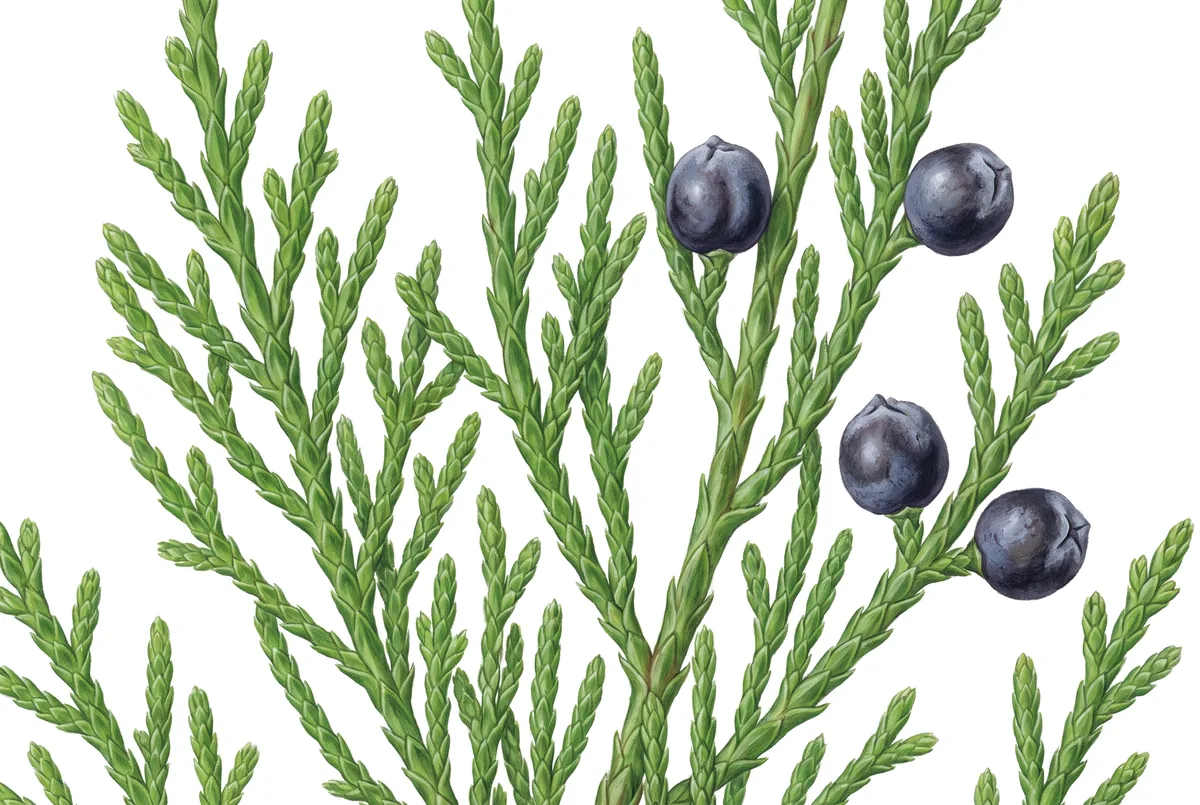
- KPU, citing conifers.org, gives dark green foliage with no purplish colour in winter and an unpleasant smell when crushed, scale-like leaves in opposite pairs in four ranks in full sun and awl-like leaves in whorls on shaded parts. Its seed cones are berry-like, bluish-black with a waxy bloom, on curved stalks, on female plants, the sexes usually on separate plants.
- Is savin juniper poisonous?
- KPU marks it as having poisonous parts, and the Gymnosperm Database says its seed cones and foliage are poisonous and that eating the foliage severely irritates the mucous membranes.
Sources
- GBIF species match API
- VASCAN, the Database of Vascular Plants of Canada (Canadensys): Juniperus sabina
- The Gymnosperm Database: Juniperus sabina
- Natural Resources Canada, Canada's Plant Hardiness Site: Juniperus sabina (savin juniper)
- Kwantlen Polytechnic University (KPU), School of Horticulture Plant Database: Juniperus sabina
- City of Calgary, YardSmart: Water-wise trees and shrubs
- City of Toronto, City Planning: Drought Tolerant Landscaping, a resource for development
- City of Penticton, Parks and Recreation: Xeriscape Garden plant list
- Missouri Botanical Garden Plant Finder: Juniperus sabina
- Oregon State University, Landscape Plants: Juniperus sabina
- University of Connecticut Plant Database: Juniperus sabina
- Cornell University, Woody Plants Database: Juniperus sabina
- Trees and Shrubs Online (International Dendrology Society): Juniperus sabina
- The HortOS catalogue for Canada (the names growers list savin juniper and its forms under on ca.hortosapp.com)
- The HortOS guides for Canada (plant grades by market; nursery plant quality)
The growers, sizes and prices above are live and change as lists arrive. Cite this page: HortOS, Savin juniper (Juniperus sabina), https://ca.hortosapp.com/plants/juniperus-sabina.
Found a fact that is wrong? Tell us and it is checked against its source.