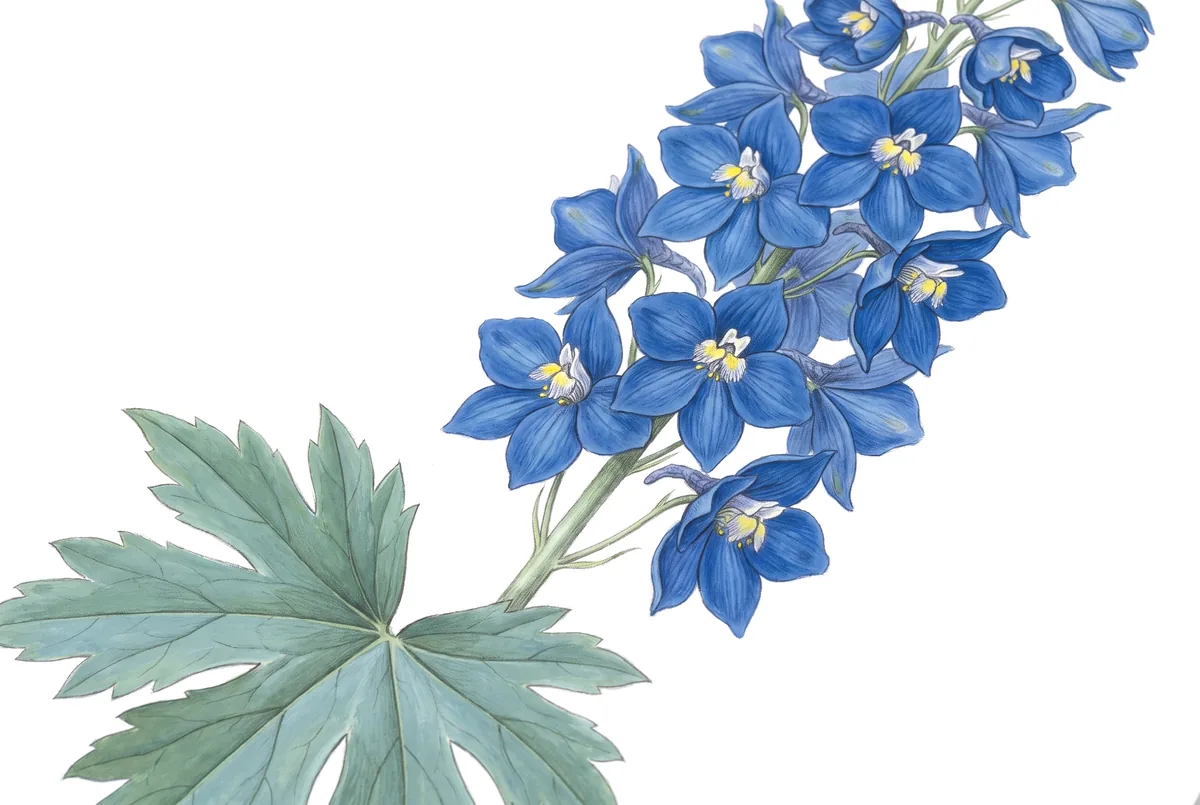
Delphinium elatum
Larkspur
Every Delphinium elatum on HortOS in one place: the plain species and 4 varieties. Pick a size to see it across all of them.
Part of Delphinium: see them all
6 growers · 3 sizes · from $16.49 ex tax
- Type
- Deciduous perennial
- Height
- 0.91 m to 2 m
- Spread
- 0.6 m to 1 m
- Growth
- Fast
- Flowers
- Blue, late spring to early summer
- Sun
- Full sun (Missouri Botanical Garden, University of Saskatchewan, Kwantlen Polytechnic University)
- In Canada
- Naturalised
Also grown by 2 nurseries (no sizes or prices listed)
Enquire with them for sizes and prices.
- BALL Horticultural CompanyKleinburg, Quebec
- East Richmond Nurseries Inc.Richmond, British Columbia
Growing candle larkspur
In Canada. VASCAN, the Database of Vascular Plants of Canada, records candle larkspur as introduced in British Columbia, Alberta, Manitoba, Yukon and the Northwest Territories, and as ephemeral in Saskatchewan and New Brunswick. The University of Saskatchewan says hybrid delphiniums revert to this species, or close to it, after several generations, and have occasionally naturalised in North America. Missouri Botanical Garden gives its wild home as clearings, woodland margins and river valleys from southern and central Europe to Siberia.
Hardiness. Kwantlen Polytechnic University's plant database, the one Canadian reference read that gives the species a zone, gives it Zone 4 (-34 to -29 °C), without naming the scale. Missouri gives USDA zones 3 to 7, says it prefers cool summers, and does not recommend it for hot, humid summers south of USDA zone 7.
Site and soil. The University of Saskatchewan says full sun is not optional, because in part shade delphiniums draw fungal infections, and asks for good air movement and a rich, moist soil with good drainage. It wants a sheltered spot, since hail can demolish plants just before they flower. Missouri adds that the species performs well in alkaline soil.
Problems. The University of Saskatchewan says powdery mildew can trouble plants in wetter climates and that the delphinium worm, the caterpillar of the golden plusia moth, chews the tips and leaves; cutting plants back in autumn removes the stems it winters in. Missouri, an American reference, reports powdery mildew, botrytis blight, leaf spots and crown rot, the last on poorly drained soil or from planting too deep, and slugs, snails and other pests.
Using candle larkspur
Missouri Botanical Garden suggests cottage gardens and the back of beds and borders, in groups or massed, with a fence behind for shelter from wind, and calls it an excellent cut flower. Kwantlen Polytechnic University lists the perennial border, a tall background, cut flowers and floristry, and the woodland margin. The University of Saskatchewan says delphiniums flower for several weeks and are seldom eaten by browsing animals, deer and rabbits included, and that bees are their main pollinators. No reference read gives a planting distance.
On a grower's list the straight species is rare: Missouri says it has largely been replaced in commerce by hybrid cultivars, listed as Delphinium x elatum or under the Elatum group, with taller stems, larger spikes and more colours. Canadian growers list such cultivars under this species, among them 'Aurora Blue', 'Aurora White', 'Guardian Blue' and the New Millenium 'Super Stars', and other delphiniums under their own names.
What to check before you buy
The University of Saskatchewan describes the Guardian series as extremely compact, bred for the cut flower trade and particularly short lived, and the New Millenium series as one that many consider the best ever developed. It says the Pacific Giants were bred in California from offspring of this species crossed with the scarlet D. nudicaule, and that what is offered under the name now is often inferior to the originals. Canadian growers name a container by its class, #1, #2, #3, #5 and #10, as the guide to plant grades and container sizes sets out; the table above shows the sizes growers list. Root and pest checks before stock leaves the grower are in the guide to nursery plant quality.
Cautions
Alberta Agriculture lists delphinium and larkspur (Delphinium species) as poisonous, all parts and young plants and seeds especially, and says not all species are equally toxic. The ASPCA lists larkspur as toxic to dogs, cats and horses, and the Ontario Poison Centre lists delphinium and larkspur among its poisonous plants. NC State says contact can cause dermatitis.
Used forcut flowermass planting
Prices are set by each grower and shown ex tax. Availability is confirmed by the grower at order.
Common questions
- Who grows Delphinium elatum wholesale in Canada?
- 6 wholesale growers list Delphinium elatum on HortOS right now, each with their own pot sizes and trade prices. They are in Ontario, Alberta, Quebec, British Columbia and Manitoba. The growers are named on this page.
- What pot sizes does Delphinium elatum come in?
- Growers on HortOS list Delphinium elatum in 150mm, 1G and 2G.
- How do I order Delphinium elatum from these growers?
- HortOS is for the trade. Add the lines you want to a list and send it: each grower gets their part of the order by email, confirms what they have and quotes freight, and nothing is bought until you approve it. Listing, searching and ordering are free.
- Is candle larkspur native to Canada?
- No. VASCAN records it as introduced in British Columbia, Alberta, Manitoba, Yukon and the Northwest Territories and as ephemeral in Saskatchewan and New Brunswick. Missouri Botanical Garden gives its native range as Europe to Siberia.
- Is a delphinium the same as a larkspur?
- Delphiniums are often called larkspurs for the spur on the back of the flower, but the University of Saskatchewan says true larkspurs belong to the closely related genus Consolida.
- How long does a delphinium live?
- NC State calls it a short-lived perennial of 3 to 5 years, and the University of Saskatchewan says usually three or four. That reference adds that dividing an established plant sometimes adds a season or two, and that plants are easy to raise from seed.
- Does it need staking?
- Missouri Botanical Garden says plants need protection from strong wind and rain, by a sheltered position and staking, and NC State says support is needed to keep it upright. The University of Saskatchewan notes that the stems are hollow and easily smashed by wind.
- Will it flower twice?
- Missouri Botanical Garden says cutting the spent spikes back to the basal leaves straight after flowering encourages more bloom in late summer or autumn. The University of Saskatchewan says deadheaded plants sometimes flower again in late summer, though less freely, and that plants left alone self-seed abundantly.
- Is candle larkspur poisonous?
- Yes. Alberta Agriculture lists all parts of Delphinium species as poisonous to people and cattle, and the ASPCA lists larkspur as toxic to dogs, cats and horses.
Sources
- GBIF species match API: Delphinium elatum
- VASCAN, the Database of Vascular Plants of Canada (Canadensys): Delphinium elatum
- VASCAN, the Database of Vascular Plants of Canada (Canadensys): Delphinium elatum, its status in each province (API answer)
- ASPCA Animal Poison Control, Toxic and Non-Toxic Plants: Larkspur (Delphinium species)
- University of Saskatchewan, Gardening at USask: Delphinium
- Kwantlen Polytechnic University, School of Horticulture Plant Database: Delphinium elatum (incl. hybrid cultivars)
- Alberta Agriculture and Rural Development: Poisonous Outdoor Plants
- Ontario Poison Centre: Common poisons, Plants
- Missouri Botanical Garden Plant Finder: Delphinium elatum
- North Carolina State Extension Gardener Plant Toolbox: Delphinium elatum
- The HortOS catalogue for Canada (the delphinium lines Canadian growers list)
- The HortOS guides for Canada (plant grades and container sizes; nursery plant quality)
The growers, sizes and prices above are live and change as lists arrive. Cite this page: HortOS, Candle larkspur (Delphinium elatum), https://ca.hortosapp.com/plants/delphinium-elatum.
Found a fact that is wrong? Tell us and it is checked against its source.