Cornus sericea 'Bud's Yellow'
Cornus stolonifera / Red Osier Dogwood / Red Twig Dogwood
One of 11 Cornus sericea varieties: see them all
9 growers · 7 sizes · from $4.99 ex tax
- Type
- Deciduous shrub
- Height
- 1.5 m to 2.5 m
- Spread
- 1.5 m to 2.4 m
- Growth
- Fast
- Flowers
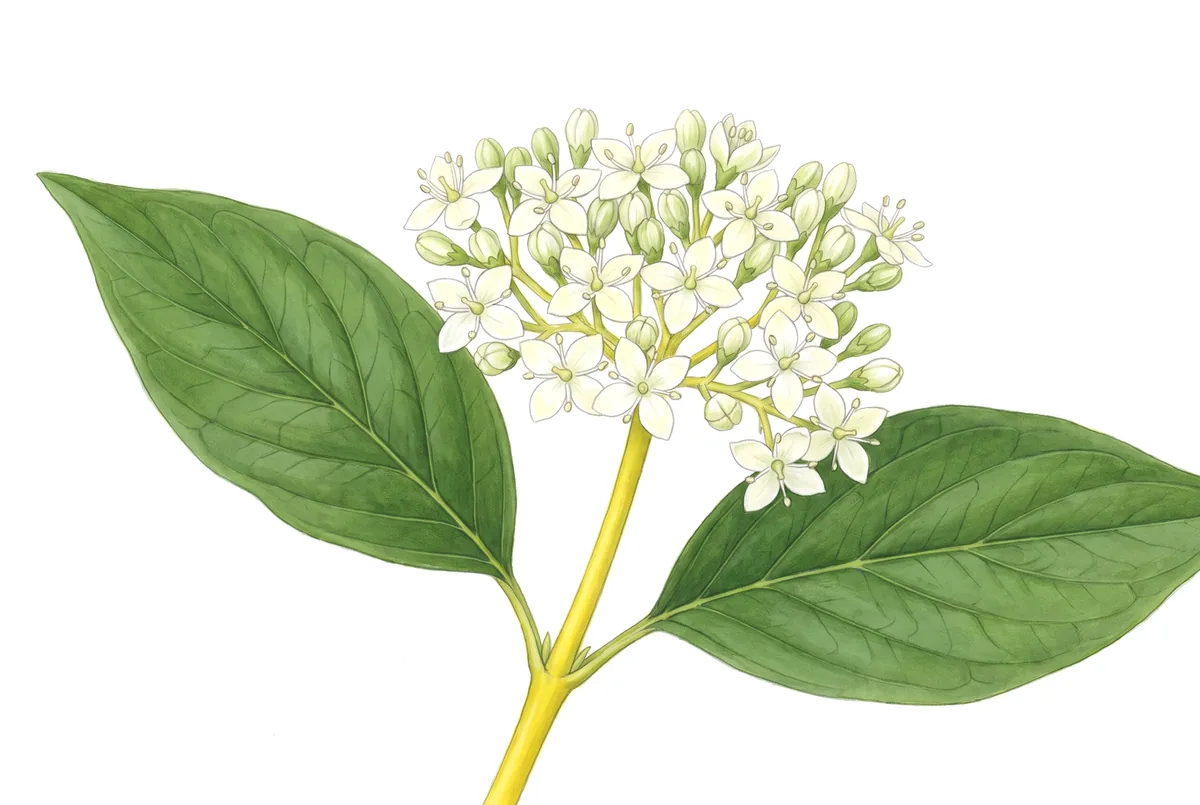
- Yellowish white, late spring to early summer
- Sun
- Full sun to part shade (Missouri Botanical Garden); full sun or partial shade (the RHS)
- In Canada
- Native
| Size | Grower | PricePrice ex tax | ||
|---|---|---|---|---|
| Plug | Youngplants CanadaPlug | $4.99 | ||
| 21 plug tray | Cityscape Plants Ltd.21 plug tray | Price on application. Sign in to ask the grower. | ||
| 1G | Foxglove Wholesale Nursery1G | $12.00 | ||
| 1G | Cityscape Plants Ltd.1G | Price on application. Sign in to ask the grower. | ||
| 2G | Ocean Nursery2G | $9.99 | ||
| 2G | Eagle Lake Nurseries Ltd2G | $28.60 | ||
| 2G | Sunstar Nurseries Ltd.2G | $31.95 | ||
| 2G | Flying Creek Trees2G | $100.00 | ||
| 2G | Cedar Rim Nursery Ltd2G | Price on application. Sign in to ask the grower. | ||
| 2G | Cityscape Plants Ltd.2G | Price on application. Sign in to ask the grower. | ||
| 2G | Foothills Nurseries2G | Price on application. Sign in to ask the grower. | ||
| 3G | Cedar Rim Nursery Ltd3G | Price on application. Sign in to ask the grower. | ||
| 5G | Eagle Lake Nurseries Ltd5G | $40.60 | ||
| 5G | Sunstar Nurseries Ltd.5G | $51.95 | ||
| Quart | Cityscape Plants Ltd.Quart | Price on application. Sign in to ask the grower. |
Growing yellowtwig dogwood
Hardiness. No Canadian reference read gives a zone for Bud's Yellow itself. Missouri Botanical Garden, an American reference, gives USDA zones 3 to 7, and the RHS rates it H7, its rating for the severest European continental climates.
Position, soil and water. Missouri gives full sun to part shade and medium to wet soil, best organically rich, fertile and consistently moist. The RHS gives chalk, clay, loam or sand, moist but well drained or poorly drained, acid, neutral or alkaline.
Pruning. The RHS puts it in pruning group 1, little or no pruning, or group 7, pruned for colourful stems. Missouri says the best colour is on young stems, and that many gardeners take out 20 to 25 per cent of the oldest stems each early spring or cut every stem to about 20 cm every two or three years.
Disease. Missouri, an American reference, says Bud's Yellow reportedly has good resistance to canker and stem dieback, and calls its leaves disease-resistant. The RHS, a British reference, calls it generally pest-free, with horse chestnut scale, cornus anthracnose and honey fungus possible.
Using yellowtwig dogwood
Missouri Botanical Garden calls it excellent massed or as a specimen, names it for a hedge, a rain garden or a property line screen, and suggests contrasting it with red-stemmed dogwoods for winter. It also finds it effective in naturalistic plantings on moist soil, where it can be left to spread and form thickets, and in wet low spots or beside streams and ponds, where its spreading roots help combat soil erosion. The RHS lists it for hedging and screens, coastal gardens, informal and cottage gardens and beds and borders. The red-stemmed forms growers list on ca.hortosapp.com include Isanti.
What to check before you buy
Check the name two ways. The spelling varies: the RHS and Cornell write Bud's Yellow, Missouri Botanical Garden Budd's Yellow. And the species varies: the USDA's GRIN-Global record files it under Cornus sericea after re-identifying it from Cornus alba, the RHS accepts it under Cornus sericea with Cornus alba 'Buds Yellow' among its synonyms, while Cornell and the University of Connecticut call it a Cornus alba cultivar. Growers on ca.hortosapp.com list it as Cornus sericea 'Bud's Yellow'.
The guide to plant grades and container sizes explains the Canadian container classes, #1, #2, #3, #5 and #10. The table above shows the sizes growers list.
Prices are set by each grower and shown ex tax. Availability is confirmed by the grower at order.
Common questions
- Who grows Cornus sericea 'Bud's Yellow' wholesale in Canada?
- 9 wholesale growers list Cornus sericea 'Bud's Yellow' on HortOS right now, each with their own pot sizes and trade prices. They are in British Columbia, Alberta, Saskatchewan and Ontario. The growers are named on this page.
- What pot sizes does Cornus sericea 'Bud's Yellow' come in?
- Growers on HortOS list Cornus sericea 'Bud's Yellow' in Plug, 21 plug tray, 1G, 2G, 3G, 5G and Quart.
- What does Cornus sericea 'Bud's Yellow' cost wholesale?
- The median trade price in a 2 gallon pot is $30.28 ex tax, across 4 growers who price it. Prices by pot size and province are on its trade price page.
- How do I order Cornus sericea 'Bud's Yellow' from these growers?
- HortOS is for the trade. Add the lines you want to a list and send it: each grower gets their part of the order by email, confirms what they have and quotes freight, and nothing is bought until you approve it. Listing, searching and ordering are free.
- How big does Bud's Yellow dogwood grow?
- The RHS gives up to 2.5 m high, in its 1.5 to 2.5 m classes for height and spread. Missouri Botanical Garden gives 1.5 to 2.4 m high and wide, on erect, usually unbranched stems.
- Is Bud's Yellow a Canadian dogwood?
- The USDA's GRIN-Global record gives it as developed in Manitoba. It files it under Cornus sericea, the red osier dogwood that VASCAN records as native in every province and territory, though some references put it under Cornus alba.
- Is Bud's Yellow better than Flaviramea?
- Two American references say so on disease. Cornell University calls it a good substitute for the disease-prone Flaviramea, and the University of Connecticut suggests it may be preferable because Flaviramea is fairly susceptible to canker.
- What do its flowers and fruit look like?
- The RHS gives small yellowish-white flowers in clusters up to 7 cm across in early summer, followed by round white berries in late summer. Its leaves are green and oval, up to 11 cm long, by the RHS.
Sources
- GBIF species match API: Cornus sericea (the species name and family)
- VASCAN, the Database of Vascular Plants of Canada (Canadensys): Cornus sericea, the species
- Royal Horticultural Society (RHS) plant finder: Cornus sericea 'Bud's Yellow'
- Missouri Botanical Garden Plant Finder: Cornus sericea 'Budd's Yellow'
- USDA Agricultural Research Service, GRIN-Global (National Plant Germplasm System): accession Ames 24553, Cornus sericea subsp. sericea 'Bud's Yellow'
- Cornell University Woody Plants Database: cultivar Bud's Yellow of Cornus sericea or alba (an American reference)
- University of Connecticut Plant Database: Cornus sericea, redosier dogwood, and its cultivars (an American reference)
- North Dakota State University Extension, Tree Handbook: Redosier dogwood, with its cultivated varieties (an American reference)
- The HortOS catalogue for Canada (the names growers list it under on ca.hortosapp.com)
- The HortOS guides for Canada (plant grades and container sizes by market)
The growers, sizes and prices above are live and change as lists arrive. Cite this page: HortOS, Yellowtwig dogwood (Cornus sericea 'Bud's Yellow'), https://ca.hortosapp.com/plants/cornus-sericea-bud-s-yellow.
Found a fact that is wrong? Tell us and it is checked against its source.